Colpa d’Alfredo da Vasco Rossi

Vasco Rossi, known simply as Vasco or the nickname Il Blasco, was born in 1952 in Emilia-Romagna, Italia. He is a singer songwriter and has recorded more than 30 albums and written over 250 songs. He refers to himself as a “provoca(u)tore” because he has been criticized for his lyrics and overall lifestyle throughout his career. He is one of the best selling Italian singers but the country seems divided: you either love or hate Vasco. I think i stand somewhere in between. While i agree he is a talented singer, some of his songs are either simply not my style or have controversial lyrics.

Vasco’s most controversial and criticized song, and I think rightfully so, is Colpa d’Alfredo. This was released in an album with the same name in 1980. It was censored from the radio and harshly criticized for using vulgar terms to speak about women’s sex lives. However, I think the issue with the song is the objectifying attitude towards women overall. Not to mention, he comes off very racist against Africans. The song actually made Vasco wildly more famus, especially after he performed it on the italian television program “Domenica In’.

While I like how the song actually sounds (it is a quite catchy rock song), I think the lyrics are quite offensive.

Ho perso un’altra occasione buona stasera.
È andata a casa con il negro, la troia!
Mi son distratto un’attimo.
Colpa d’Alfredo,
che con i suoi discorsi seri e inopportuni
mi fa sciupare tutte le occasioni.
E prima o poi lo uccido, lo uccido.
E lei invece non ha perso tempo,
ha preso subito la palla al balzo.
L’ho vista uscire, mano nella mano, con quell’africano
che non parla neanche bene l’italiano,
ma si vede che si fa capire bene quando vuole.
Tutte le sere ne accompagna a casa una diversa.
Chissa che cosa le racconta?
Per me è la macchina che ci ha che conta!
E quella stronza non si è neanche preoccupata
di dirmi almeno qualche cosa, che so, una scusa.
E si era già dimenticata
di quello che mi aveva detto prima.
Mi puoi portare a casa, questa sera?
Abito fuori Modena, Modena Park.
Ti porterei anche in America!
Ho comperato la macchina apposta!
E mi ero già montato la testa.
Avevo fatto tutti i miei progetti.
Non la portavo mica a casa.
Beh, se la sposavo non lo so, ma cosa conta!
Sono convinto che se non ci fosse stato lui
mi avrebbe detto si!
Sono convinto che se non ci fosse stato lui
mi avrebbe detto si!

Ho perso un’altra occasione buona stasera.


I lost another good opportunity, this evening.
She went home with a negro, the whore!
I was distracted for a moment.
(It’s) Alfredo’s fault
who with his serious and untimely discourses
makes me waste all the occasions.
And sooner or later I kill him, kill him.
And she, however, didn’t waste any time,
she, right away, grabbed the ball on the rebound.
I saw her go out, hand ih hand, with that African
who doesn’t even speak Italian well,
but, obviously, he can explain himself well, when he wants.
Every evening he takes home a different one!
I wonder what he tells them?
For me it’s the car he has that matters!
And that ball of dung didn’t even bother
to tell me anything, an excuse.
And she had already forgotten
what she had asked me before.
“Can you take me home, this evening?
I live outside Modena, Modena Park!”
I would even take you to America!
I bought the car for that purpose!
And I was already getting a big head.
I had already planned everything.
I certainly wasn’t going to take her home.
Well, if I was going to marry her, I don’t know… it doesn’t matter!
I’m convinced that, if he hadn’t been there,
she would have said yes.
I’m convinced that, if he hadn’t been there,
she would have said yes.
Viva la mamma da Edoardo Bennato

Edoardo Bennato is an Italian singer songwriter who was born in Naples in 1946. He began his music career in the sixties and has since been known for being an innovative blues, rock and roll, and folk singer. He performed many of his songs as a literal one man band; singing, strumming guitar, and playing harmonica, kazoo and foot-drum.

Bennato released Viva La Mamma in 1989. I think it sounds like an alternative version of a rock/pop song. He has a kind of nasally voice that contributes to the songs uniqueness. My favorite part of the song is when catchy guitar strums and a trumpet introduce the first chorus. The first verse builds up to this moment and when the chorus begins it undoubtedly invokes dancing along.

I think the lyrics are about how Italy has changed since the 1950s and 60s, especially for the mothers. He seems to suggest that rock n roll culture is either proof of the changes or their cause. One verse reads

Angeli ballano il rock ora
Angels dance rock now

non è un juke-box è un orchestra vera
Its is not a juke-box, it is a live orchestra

viva la mamma perché se ti parlo di lei
Live momma because if i talk to you about her/it

non sei gelosa!…
You are not jealous

The song goes on to allude to the fact that mothers may have a harder time connecting to their kids in the 1980s because they did not grow up in the same time or with the same music. Rock n roll had a huge impact on youth culture and it is difficult to unite generations when there has been such a distinct shift in contemporary culture.

The entire text is:

C’è folla tutte le sere
Nei cinema di Bagnoli
Un sogno che è in bianco e nero
Tra poco sarà a colori
L’estate che passa in fretta
L’estate che torna ancora
I giochi messi da parte
Per una chitarra nuova
Viva la mamma!
Affezionata a quella gonna un po’ lunga
Così elegantemente anni cinquanta
Sempre così sincera
Viva la mamma!
Viva le donne con i piedi per terra
Le sorridenti miss del dopoguerra
Pettinate come lei
Angeli ballano il rock ora
Tu non sei un sogno, tu sei vera
Viva la mamma perché
Se ti parlo di lei non sei gelosa!
Viva la mamma!
Affezionata a quella gonna un po’ lunga
Indaffarata sempre e sempre convinta
A volte un po’ severa
Viva la mamma!
Viva la favola degli anni cinquanta
Così lontana eppure così moderna
E così magica
Angeli ballano il rock ora
Non è un juke box, è un’orchestra vera
Viva la mamma perché
Se ti parlo di lei non sei gelosa!
Bang, bang, la sveglia che suona
Bang, bang, devi andare a scuola
Bang, bang, soltanto un momento
Per sognare ancora!
Oh, ohohohoooo
Oh, ohohohoooo
Viva la mamma!
Affezionata a quella gonna un po’ lunga
Così elegantemente anni cinquanta
Sempre così sincera
Viva la mamma!
Viva le regole e le buone maniere
Quelle che non ho mai saputo imparare
Forse per colpa del rock! (Rock)
Forse per colpa del rock!

Sarà perché ti amo da Ricchi e Poveri

Ricchi e poveri is an italian pop band that formed in the 1960s. The four original members were Franco Gatti, Angelo Sotgiu, Angela Brambati, and Marina Occhiena. They were very successful and played the Sanremo music festival several times as well as appearing on Eurovision song contest in 1978. They dominated the italian music charts in the 1980s and 90s despite Martina Occhiera leaving in 1981 to pursue a solo career. They are especially known for having songs or covers of their songs in many languages. For example, Sara perche ti amo was translated into spanish and there have been many Mexican/Caribbean/South American bands who have covered it since. It has been covered in many genres, including: tropical, dance, and mexican folk to name a few. 

Ricchi e poveri released Sara perche ti amo in 1981 and first performed it at the 31st Sanremo music festival. It only received fifth place in the festival but remained one of the most popular songs in italy for 8 months after. It is a very upbeat song and the band has a very distinct way of singing it: they sing in short staccato breaths that are high pitched and, for lack of a better word, ‘cutesy’. I think it is very catchy. It is a love song about explaining things through love. One verse reads:

Ma dopo tutto
But after all

che cosa c’è di strano
What’s weird

è una canzone
It’s a song

sarà perché ti amo
It’s cause i love you

se cade il mondo
If the world falls down

allora ci spostiamo
(so) we move

se cade il mondo
If the world falls down

sarà perché ti amo
Its cause i love you

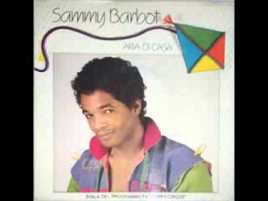
Aria Di Casa da Sammy Barbot

Aria di casa is an Italian song from 1981 that, to me, perfectly embodies ‘80s music.’ This song, sung by Sammy Barbot, is sort of soft alternative rock. A steady drum beat accompanied by psychedelic guitar strums creates a catchy and light rhythm.

Sammy Barbot is the stage name of a french man named Jacques Edourd Barbot. Sammy was born in Martinique, France. He moved to Paris where he sang and acted in the film “Hallucination Strip.” Two Italian TV writers discovered him and convinced him to move to Italy in 1977 to host a musical television show. Aria di Casa (mia) was the theme song of Sammy’s show “Happy Circus” and became his first successful single. It was fifth on the charts in Italy and was the 50th best selling single there in 1982.

Aria di Casa is about dreams, fantasies, and travel. It is said that the song is about the sensations of returning home after travel. However, i think it is in favor of traveling. It promotes traveling the world and that feeling like freedom. This makes sense considering his move and general interest in both Italy and France. 

Oh mai

Oh never

E la mente torna

And the mind returns

A sognare un’onda

To dream of a wave

Un cielo blu

A blue sky

Aria aria

Air sir

Di casa mia

In my house

Aria di liberta’

Air of freedom

Girare il mondo

Go around the world

This is the album cover (which reminds me of saved by the bell).

hqdefault

Vivo Per Lei da Andrea Bocelli (e Giorgia)

Vivo per Lei by Andrea Bocelli has become one of my favorite songs. I was introduced to it by a friend after I told her I was looking for Italian music. I listened to it on repeat for days after and have loved it ever since.There is a beautiful piano in the background throughout that is complimented by an orchestra at certain points. It is a duet and the voices blend together nicely. The original is sung by two Italians however there are several other versions that Bocelli sings with German, Spanish, and English singers.

Vivo per Lei was actually written by O.R.D. (an Italian music group) in 1995 for their album Vivo Per.. The lyrics were rewritten later that year and made a duet by Gatto Panceri. The new version, sung by Bocelli and Giorgia, centered on the love of music, rather than a woman like in the original version. I was surprised to find out the “Lei” referred to music because the beginning seems like a declaration of love.

Vivo per lei perché mi fa

vibrare forte l’anima

vivo per lei e non è un peso

As the song continues, it is clear that Bocelli is referencing music. Listening to the lyrics in detail, I’m not sure how I did not realize it before.

Vivo per lei la musica

Vivo per lei è unica

Though the subject changes the meaning of the lyrics, they are equally beautiful and now more unique than i had once thought. Bocelli sings of music being his constant and one true love. This is beautiful because it highlights the importance of music not just for sharing with other people, but for growing yourself.

Grande amore da il volo

When i first began this class, i never thought i would be listening to opera music in my free time. Though it is a more distilled pop version, il volo is an italian music group that sings opera songs. Il volo is a trio formed by Gianluca Ginoble, Piero Barone, and Ignazio Boschetto. They were originally all solo artists competing on the tv singing competition Ti lascio una canzone. The director and creator of the show, Roberto Cenci, was inspired by the Three Tenors musical group and had the idea to combine them. I’m very glad he did because they have created amazing music and have voices that beautifully compliment one another.

Grande Amore is one song by il volo i especially like. Like many of their other songs, this is a ‘popera’ love song. It begins with a catchy pianoforte that escalates throughout the song. Towards the chorus, and orchestra comes in that nicely compliments the rest of the instruments. The instrumental and the lyrics combine to make a very passionate and emotional song. The singers sing with a lot of force and you can feel the real emotions behind what they are saying. I especially love the chorus because it represents the all consuming nature of love. It reads:

Dimmi perché quando penso, penso solo a te

dimmi perché quando amo, amo solo te

dimmi perché quando vivo, vivo solo in te grande amore

dimmi che mai

che non mi lascerai mai.

dimmi chi sei

respiro dei giorni miei d’amore

dimmi che sai

che non mi sbaglierei mai

dimmi che sei

che sei il mio unico grande amore

This idea of ‘un grande amore’ is that of having a one true love. The song is based in this and the feelings you have towards this person– ‘the one’.

Here is the music video for grande amore which demonstrates the drama and passion of the song:


Ragazzo Fortunato da Jovanotti

Jovanotti is an important and iconic contemporary italian singer. He begin singing hip hop, rap, and disco and has evolved to include other forms like funk, international peces, and classical components. Jovanotti has also become socio-politically involved by singing of philosophy, religion, and politics. This is traditional of italian cantautori, but not really true of american singers. Though many americans sing of social justice and equality, it is not as common to write explicitly of philosophy or religion. It is interesting how he fits ideas seamlessly into songs, like seen below. He has teamed up with other artists to advocate for noble causes, like his and Bono’s fight to cancel foreign debt in poor african countries.

One song of Jovanotti’s that i think demonstrates his talent is “Ragazzo Fortunato.” it was released in 1992 so it is in his pop phase, yet includes important moral questions. It is about how lucky he is to have the life he does. There are also verses like this that allude to philosophical dilemmas:

Siddhartha me l’ha detto

Che conta solo l’amore

E tutto quello che ti serve

È stare dentro al cuore

Ma se devo dirla tutta

Qui non è il paradiso

All’inferno delle verità

Io mento col sorriso


I really like this song because it has an interesting and engaging beat. The beginning chorus of “hey” and the words that are added between verses make the piece sound more complete and catchy. I especially like the juxtaposition between the voices of jovanotti and the featured woman. She is not listed anywhere because she only comes in at the beginning and chorus but i think the blending of voices enhances the song a lot. Not to mention, the instrumentals bring everything together and solidifies a rhythm.

Roma-Bangkok

As i have begun listening to more italian music, I have come across a lot of Baby K. Baby K, or Claudia Nahum, is an italian cantuatore, rapper, and model. Her music is primarily pop and rap and is really fun to listen to. One of my favorite songs of hers right now is Roma-Bangkok.

Roma-Bangkok is a pop rap song on Baby K’s second album Kiss Kiss Bang Bang. italian singer Giusy Ferreri is featured on vocals. It is upbeat and a song that will make you want to get up and dance, especially when Giusy does vocals during the chorus. The song is about living in the moment with your loved ones no matter where you are and the chorus lists places around the world. It reads:

All’ultimo secondo

Volerei da te, da Milano

Fino a Hong Kong

Passando per Londra, da Roma e fino a Bangkok

Cercando te

In an interview, Baby K said “The lyrics of this song present the geographical map of my life: London, Rome and the Far East. Actually, they are the places where I lived, which I still carry within myself and I can live again through my music.” The music video shows friends having adventures around the world together. It is awesome to see an artists’ background influencing their songs because it makes the message of making the most of wherever you are even more potent.

Claudia was born to italian parents in Singapore and moved to london- she now lives in rome– so a lot of her music is partially bilingual and includes certain english words. This particular song has a spanish version sung by the Argentine Lali.

Roma-Bangkok was a huge success in Italy. It topped the charts when it came out in 2015 and was Baby K’s first number one single. It stayed on the charts for 11 weeks straight and was named nine times platinum in Italy. I think the song is so popular because it is upbeat and has an important message about just living in the moment. It is not heavy or particularly thought-provoking, it just makes you want to have fun and be around people you love.

Con Te Partirò

Con Te Patritò is the first and really only italian song that stuck with me before starting this class. I listened to Andrea Bocelli a few times during high school and was blown away by his voice. I typically do not like operas, but this ‘operatic pop’ genre of the song sounds amazing and has been playing on loop on my phone the past few days.

The first thing I think of when listening to this song is that it sounds like the song playing for graduations. After the introductory instrumental though, Bocelli sings in a scale of lyrics, meaning he seems to hit several vocal ranges. The first words are striking because they are quick and rhythmic. This staccato singing continues throughout the song and alternates with more elongated singing (notes that are held out). Throughout the song, a constant symphony rises and falls. The collection of instrumental sounds is very beautiful and compliments the lyrics well.

My favorite part of the song is probably the chorus because of its sound and meaning. The song is very raw and talks of leaving behind all the adventures you could have, and expected to have, with your love. The chorus is:

Con Te Partiro

With you i leave


Paesi che non ho mai

Countries which i have never


Veduto e vissuto con te

Seen and lived with you


Adesso, si, li vivro

Now, Yes, I will live them


Con Te Partirò is originally a french opera song written by Francesco Sartori and Lucio Quarantotto. The song was first performed by Bocelli at the 1995 Sanremo music festival and was released on his album that same year. A second version of the song came out the next year and was partially sung in english. “Time to say Goodby” was a duet of Bocelli and English singer Sarah Brightman. This duet had huge success and became the biggest selling single in all of German history. As a result, Bocelli and Brightman did a version where he sang in italian and she in German, that sold 12 million copies worldwide. Lastly, Bocelli recorded the song in spanish. “Por Ti Volare” is said to be one of his signature songs.

I think it is fascinating that this song was recorded in so many languages. It represents how popular it was and with a very diverse fandom. The song also keeps a lot of its rhythm and sound in the other languages. Interestingly, the country the song was least popular in is Italy: it topped the charts in Germany, Belgium, etc.. but was not originally a success in the country it was recorded.